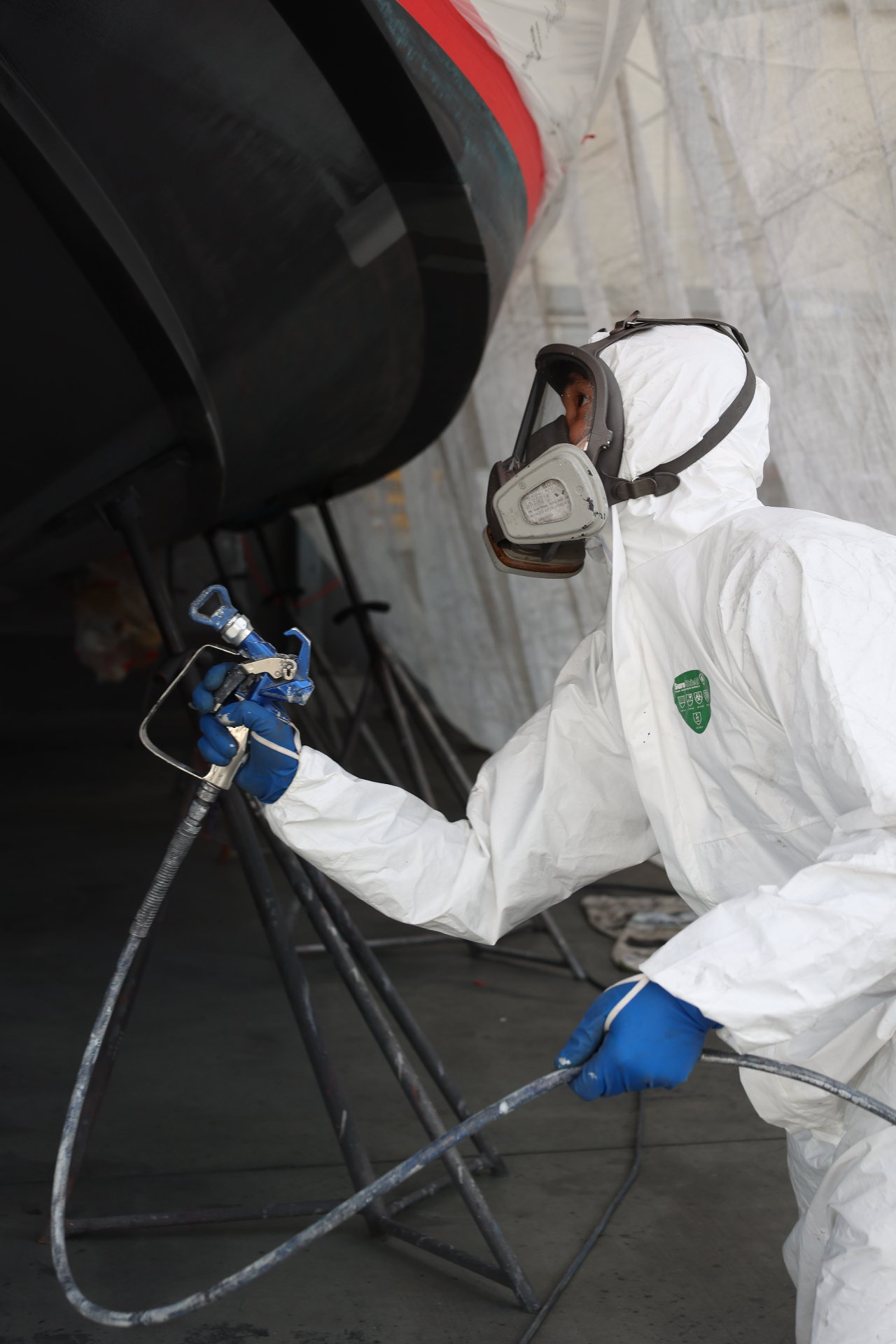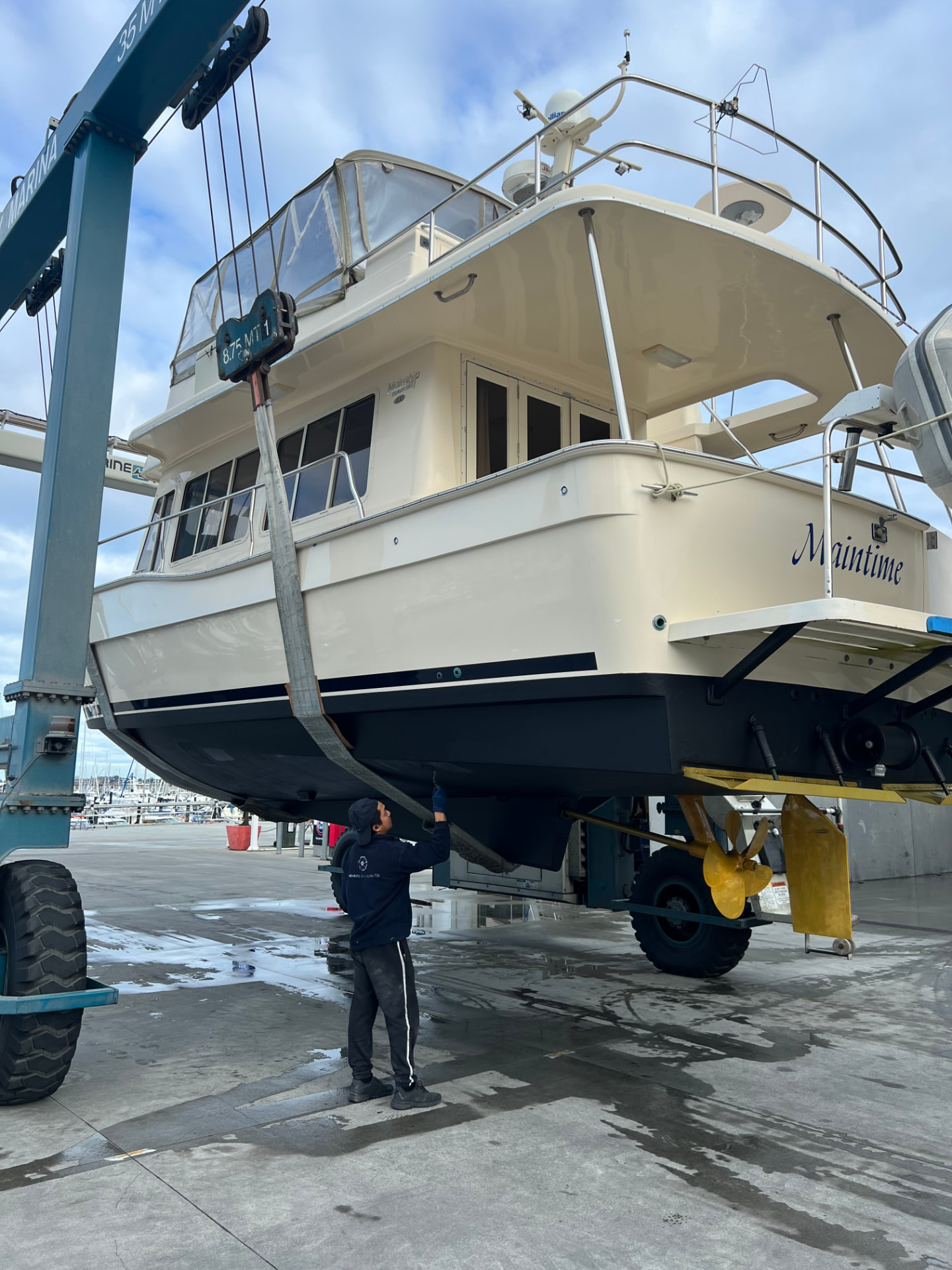
If your existing antifoul is sound, well bonded and compatible with what you plan to apply, preparation and another coat is usually enough. If it is cracking, flaking, lifting or has built up into thick, uneven layers, more coats will only add to the problem, and removal may be the better long-term option. The decision depends on what an inspection of the coating shows.
Why the condition of the old coating matters
A new antifoul can only be as good as the surface it bonds to. If the layers underneath are weak or poorly attached, the new coat will eventually fail with them, often within a season. Applying more paint over a failing system also adds weight and roughness, and makes eventual removal a bigger job.
Signs another coat may not be enough
Coating build-up
Hard antifouls in particular can build up over many seasons. Thick layers can become uneven, crack under their own weight or flex, and hide problems beneath. Visible steps where old layers have chipped away are a common sign.
Cracking and crazing
Fine cracks across the surface, sometimes called crazing, often indicate a coating that has become brittle or is too thick. Cracks can let water reach the layers beneath.
Flaking, peeling or lifting
Paint that comes away in flakes or sheets is no longer properly bonded. Recoating over it is unlikely to hold.
Poor adhesion
If the antifoul comes off easily when sanded, scraped or tested with tape, it may not be bonded well to the primer or substrate. Previous preparation problems often show up this way.
Incompatible coatings
Some antifoul types don't bond well over others. If the hull's coating history is unknown, or a previous owner switched systems without the right barrier coat, adhesion problems can follow. Choosing the right antifoul covers compatibility in more detail.
When recoating may be enough, and when removal may be appropriate
| What the inspection shows | Likely approach |
|---|---|
| Sound, well-bonded coating with normal wear | Clean, prepare and recoat |
| Small, isolated areas of damage | Spot repair and feather in, then recoat |
| Widespread flaking, cracking or lifting | Removal is often the more reliable option |
| Heavy build-up over many seasons | Removal may be needed to restore a sound base |
| Incompatible or unknown coating history | Testing first; may need a barrier coat or removal |
This is general guidance only. The right approach for your hull needs an inspection, and sometimes adhesion or compatibility testing.
Professional antifoul removal options
There are several ways to remove antifoul, and not every method suits every hull. The choice depends on the hull material, the condition and thickness of the coating, the substrate underneath and the rules of the yard where the work is done.
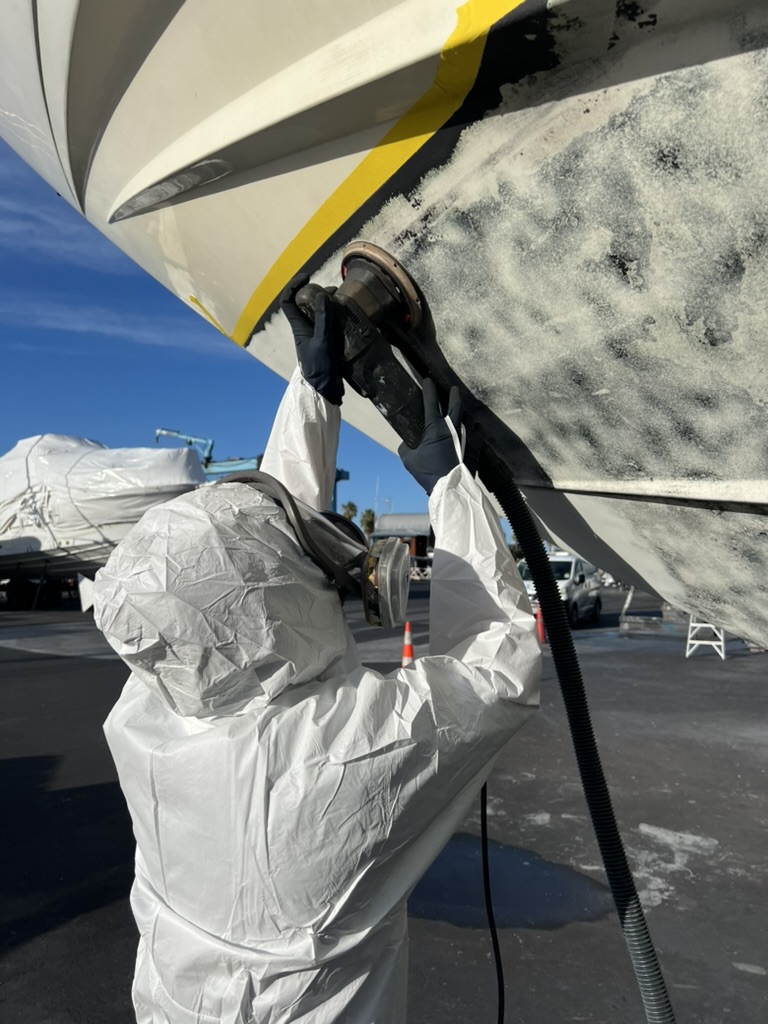
- Mechanical sanding or scraping, with controls to manage dust and waste.
- Chemical strippers designed for marine coatings, used in line with the product instructions.
- Abrasive blasting methods, where the substrate and site allow it.
Each has trade-offs in time, cost, the risk of damaging the substrate and the waste produced. A professional assessment helps choose a method that removes the coating without harming the hull underneath.
Hazardous dust, containment and waste
Antifoul is designed to be toxic to marine life, and dust and scrapings from old coatings can be harmful to people and the environment. Removal should include suitable protective equipment, dust extraction or wet methods where appropriate, and containment so that residue doesn't reach the ground, stormwater or the sea.
Marinas and boatyards in Auckland typically have their own rules about hull preparation, including where it can be done, what containment is required and how waste must be disposed of. These rules exist for good reasons, and any contractor working on your boat should follow them. If you are considering doing removal yourself, check the yard's requirements first.
What happens once the substrate is exposed
Removing antifoul back to the gelcoat, laminate or metal often reveals the true condition of the hull. Osmotic blisters, damaged gelcoat, corrosion or previous repairs may need assessment before any new coatings go on. Some issues are cosmetic; others need a specialist.
Once any repairs are complete, the hull usually needs the correct primer or barrier coat system before antifoul is applied, followed by the right number of coats at the specified thickness. Our antifoul stripback service covers removal and a new system, and we can assist with boat repairs where they are needed.
Frequently asked questions
Unsure whether to recoat or strip back?
Request a quote and we'll assess the condition of your existing antifoul before recommending the work.