The right antifoul is the one that suits your hull material, how fast and how often the boat moves, where it is kept and what is already on the hull. Price and brand come after those questions. This guide explains the main antifoul types, the factors that matter most for boats kept around Auckland, and why a recommendation based on your vessel is worth more than a recommendation based on the shelf.
What antifoul does and why the choice matters
Antifoul is a coating applied below the waterline to slow the build-up of slime, weed, barnacles and other marine growth. Most antifouls work by releasing a biocide at the surface of the paint, while some rely on a slippery surface that makes it harder for organisms to stay attached.
Fouling adds drag, which can reduce speed and increase fuel use, and heavy growth makes the next haul-out slower and more expensive to clean. In Auckland it also matters for biosecurity: regional rules restrict moving a heavily fouled hull between areas, so a coating that suits your boat helps keep it compliant as well as clean.
Choosing the wrong system rarely shows up on day one. It tends to appear months later as fast fouling, coating that wears away too quickly or too slowly, or paint that won't bond properly with what was underneath.
Hard, ablative and self-polishing antifouls explained
Manufacturers use these terms in slightly different ways, and some products sit between categories. Treat the labels as a starting point and check the product data sheet for how a specific paint is designed to behave.
Hard antifouls
A hard antifoul forms a tough film that stays in place while the biocide leaches out over time. It copes well with abrasion and is often used on faster boats or hulls that are cleaned more often. Because the film doesn't wear away, layers can build up over successive seasons and may eventually need removing.
Ablative antifouls
An ablative (sometimes called eroding or semi-hard) antifoul slowly wears away as the boat moves through the water, exposing fresh biocide. This helps limit build-up between haul-outs. It generally performs best on boats that are used regularly; a boat that sits for long periods may see less of the self-cleaning effect.
Self-polishing antifouls
Self-polishing coatings are designed to erode at a more controlled rate through a chemical reaction with seawater, giving a smoother, more consistent release of biocide. Some ablative products are marketed as self-polishing, which is where the terminology overlaps.
Foul-release coatings
Foul-release coatings use a very slippery surface rather than a biocide-led approach, so growth struggles to grip and tends to release when the boat moves. They are most commonly used on running gear. Our Propspeed application service covers this type of coating for props, shafts and other underwater metals.
Antifoul types compared
| Type | How it works | Tends to suit | Things to consider |
|---|---|---|---|
| Hard | Film stays in place; biocide leaches out | Faster boats, hulls that are cleaned regularly | Layers can build up; may need removal eventually |
| Ablative / eroding | Surface wears away with use, exposing fresh biocide | Boats used regularly at moderate speeds | Less effective on boats that rarely move; wears faster at high speed |
| Self-polishing | Controlled chemical erosion in seawater | Boats wanting steady performance through the season | Product behaviour varies by brand; follow the data sheet |
| Foul-release | Slippery surface reduces how well growth attaches | Running gear such as props and shafts | Needs specific preparation; not a general hull antifoul substitute |
This table is general guidance. The right product for a particular boat depends on an inspection of the hull and the coatings already on it.
What decides the right antifoul for your boat
Hull material
Fibreglass, timber, steel and aluminium hulls all have different requirements. Aluminium is the most important example: many copper-based antifouls are not suitable because of the risk of galvanic corrosion, so manufacturers specify aluminium-compatible products. Timber and steel hulls may need particular primers or barrier coats.
Speed and hull type
A planing powerboat puts very different demands on a coating than a displacement launch or a yacht. Some eroding coatings wear faster at high speed, while a hard coating may suit a boat that regularly runs fast.
How often the boat is used
A boat that goes out most weekends keeps water moving over the hull. One that sits on a marina berth for weeks at a time gives growth more opportunity to settle. Be honest about how the boat is actually used rather than how you'd like to use it.
Where it is kept
Fouling pressure varies around the Hauraki Gulf and Auckland's harbours, and between a sheltered marina, a swing mooring and a trailer. Water temperature, flow and local growth all play a part. Trailer boats that are kept out of the water may need a different approach altogether.
Existing coatings and compatibility
What is already on the hull limits what can go on top. Some antifoul types don't bond well over others, and switching between systems may need a barrier coat, a tie coat or full removal. If the history of the hull is unknown, testing and inspection come before choosing a product. Our guide to antifoul removal or another coat explains how this is assessed.
Preparation matters as much as the product
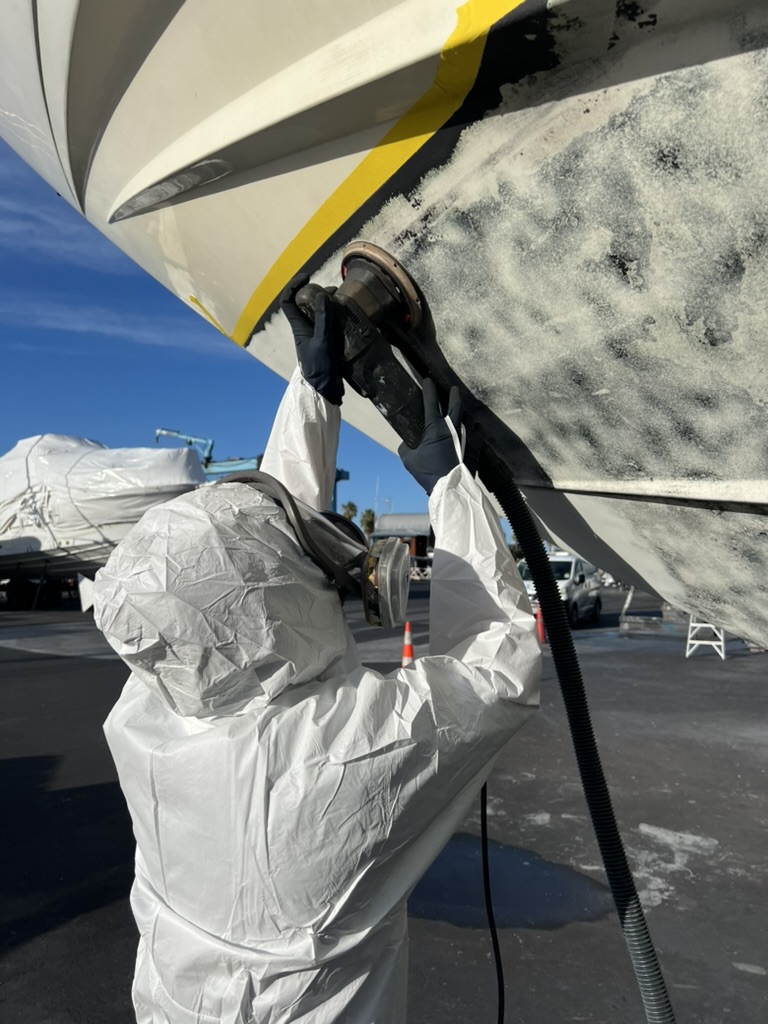
Even the most suitable antifoul will underperform if it goes onto a poorly prepared surface. A proper application usually involves washing and degreasing, sanding or abrading to give the new coat something to grip, repairing any damaged areas, and applying the correct number of coats at the thickness the manufacturer specifies.
Edges and high-wear areas such as the waterline, bow and keel leading edges often benefit from extra attention. Drying times between coats and before relaunch also need to follow the product instructions.
Getting a recommendation for your vessel
A useful recommendation starts with a few questions and a look at the hull. Before you ask for a quote, it helps to have the following ready:
- Hull material, length and type (planing, displacement, yacht or trailer boat).
- How often and how fast the boat is typically used.
- Where it is kept: marina berth, swing mooring, dry stack or trailer.
- What antifoul was last applied and when, if you know.
- Any issues you've noticed, such as fast fouling, flaking or rough patches.
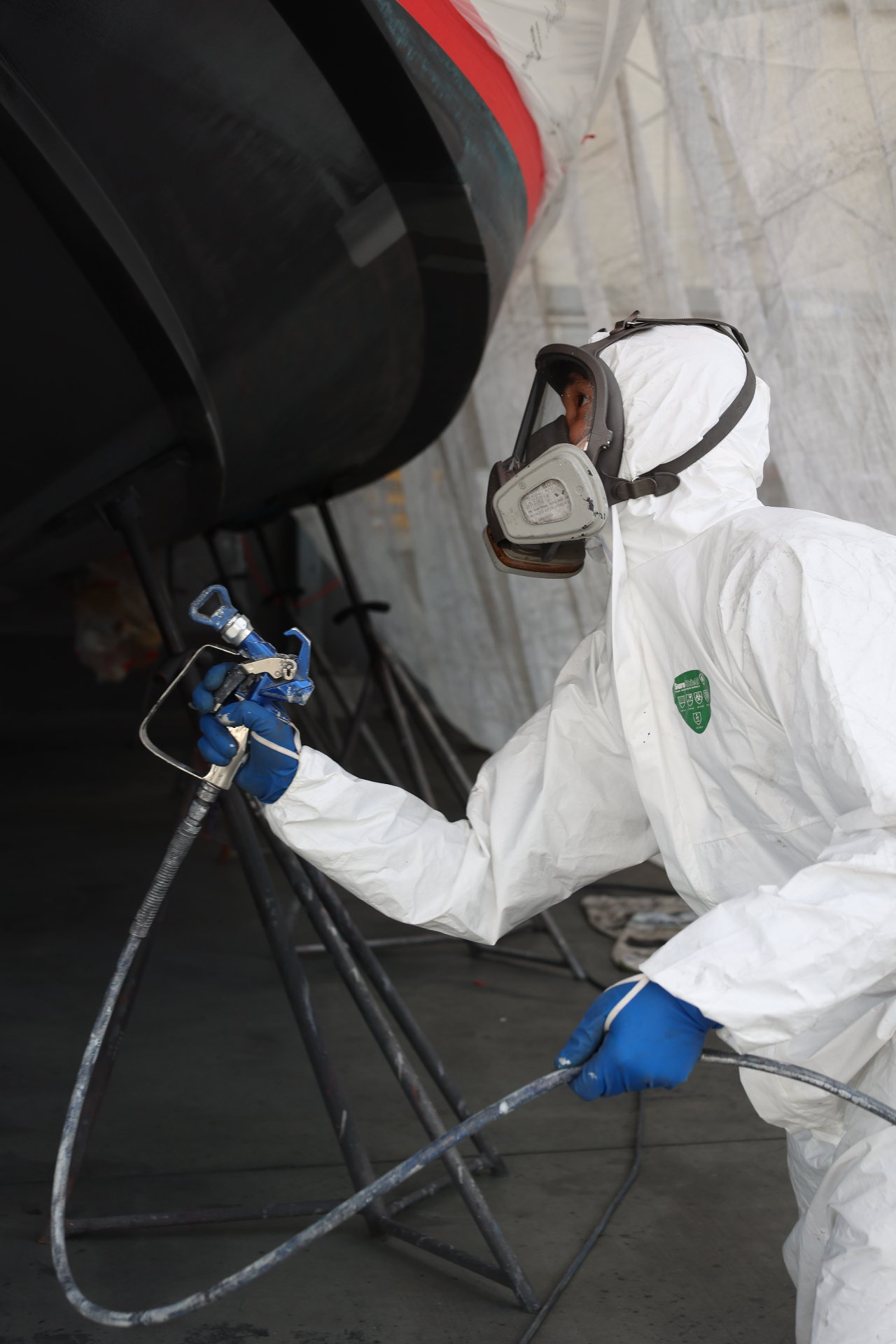
We apply systems from leading manufacturers and match the product to the vessel, its use and its location. You can read more about how we approach it on our antifoul application page.
Frequently asked questions
Not sure which antifoul suits your boat?
Tell us about your vessel and how you use it, and we'll recommend a system based on its hull and existing coatings.