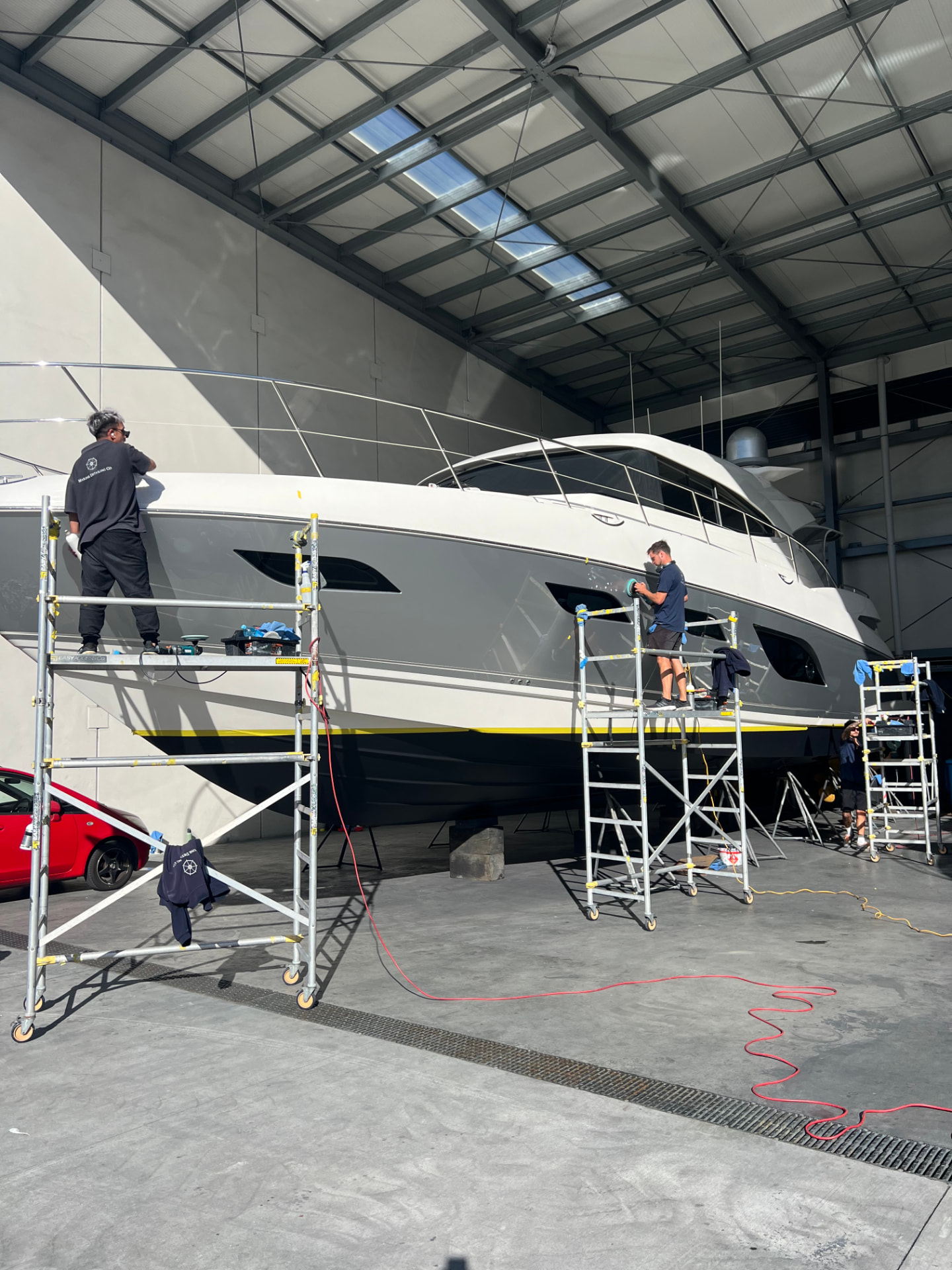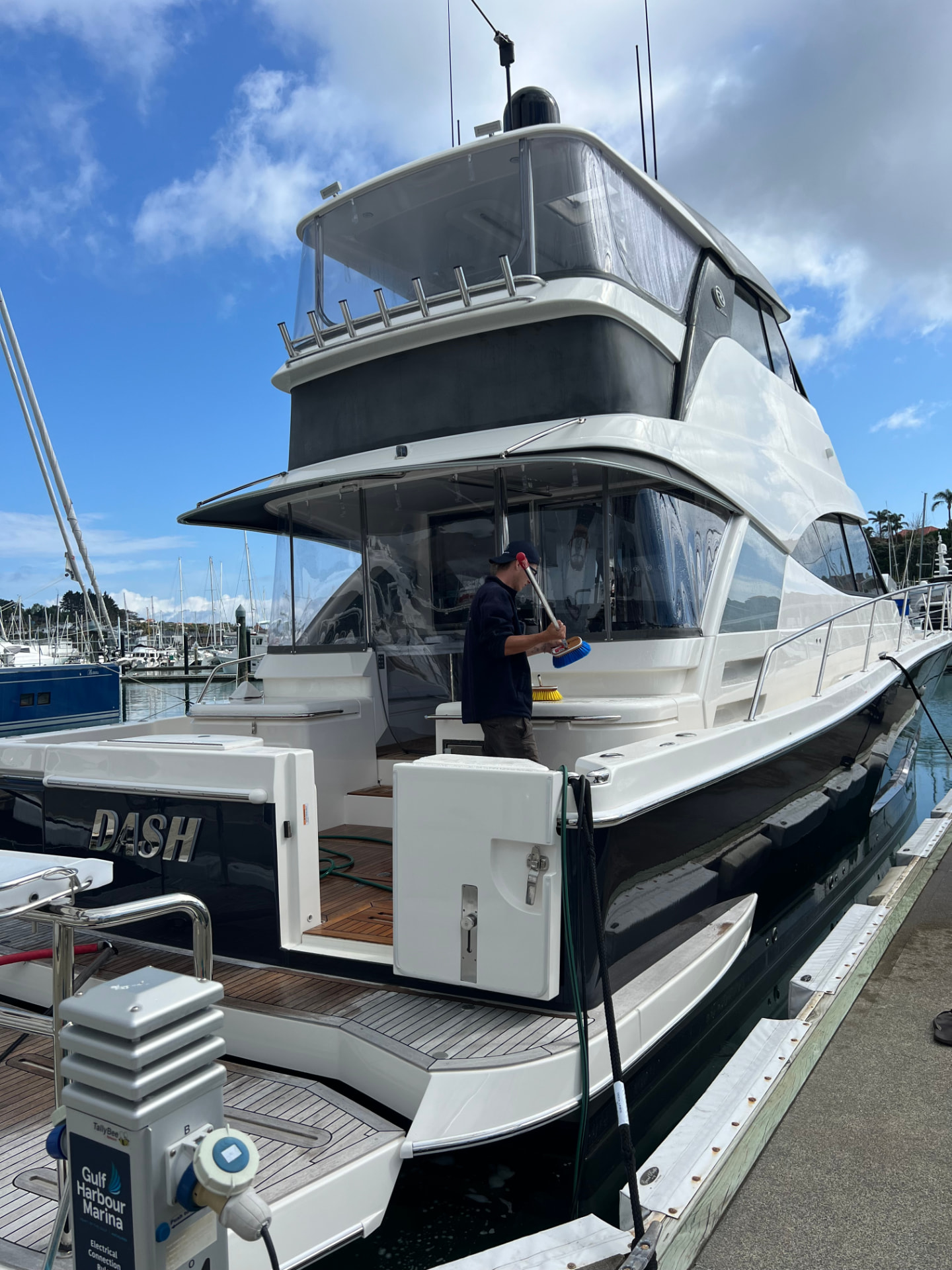
Wax, polymer sealants and ceramic coatings all protect gelcoat and paint, but they differ in preparation, application, maintenance and cost. No option is automatically best. The right choice depends on the condition of the surface, how the boat is used and stored, and how much ongoing maintenance you are realistically going to do.
What a protective layer does
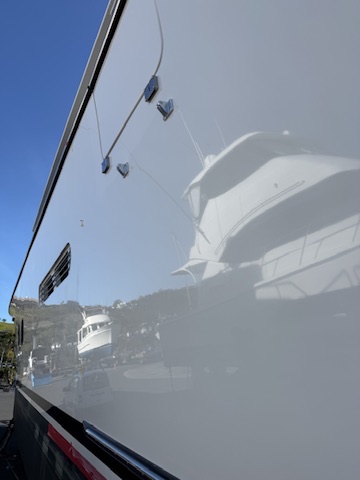
A protective product sits on top of the gelcoat or paint and takes some of the exposure the surface would otherwise face. It helps reduce the effects of UV, salt and contamination, makes the boat easier to clean, and can enhance gloss.
What it can't do is repair a surface. No wax, sealant or coating fixes oxidised, crazed, cracked or failing gelcoat or paint. Applying protection over a damaged surface simply seals in the damage, which is why preparation is so important.
The three main options
Wax
Marine waxes, often based on carnauba or synthetic blends, are the traditional option. They are relatively easy to apply, forgiving and inexpensive. Wax generally needs reapplying more often than sealants or coatings, particularly on surfaces with high sun exposure.
Polymer sealants
Polymer sealants are synthetic products designed to bond to the surface and typically last longer than a traditional wax. They are usually still straightforward to apply and maintain, and can be topped up without specialist equipment.
Ceramic and nano coatings
Ceramic coatings, often called nano coatings, use silica-based chemistry to form a harder, more durable layer. They usually require thorough preparation, controlled application and correct curing. Durability varies considerably by product, surface and conditions, so manufacturer claims should be read alongside the maintenance they require.
Wax, sealant and ceramic coating compared
| Wax | Polymer sealant | Ceramic / nano coating | |
|---|---|---|---|
| Preparation | Clean surface; polishing recommended | Clean, decontaminated surface; polishing recommended | Thorough decontamination and correction; surface must be sound |
| Application | Simple; forgiving | Simple to moderate | Precise; controlled conditions and curing |
| Reapplication | Most frequent | Less frequent than wax | Least frequent, with correct maintenance |
| Maintenance | Regular washing and re-waxing | Regular washing and top-ups | Regular washing with compatible products; periodic inspection |
| Upfront cost | Lowest | Moderate | Highest |
| Repairs failing surfaces? | No | No | No |
Actual durability depends on the product, the surface, exposure and maintenance. We don't quote fixed lifespans without knowing the boat.
Preparation and substrate condition
The finish under any protective layer decides how good the result looks and how well it performs. A surface with oxidation, swirl marks or contamination will look the same, or worse, once sealed in. For the best results, gelcoat usually needs washing, decontaminating and polishing first. Our guide to preventing gelcoat oxidation explains what polishing can achieve.
Substrate stability also matters. Coatings are best suited to sound gelcoat or paint. If the surface is very thin, crazed, flaking or due for repair, it is usually better to address that before investing in a premium coating.
Realistic expectations
- All three options wear with exposure and washing; none is permanent.
- Ceramic coatings reduce how easily dirt sticks, but the boat still needs regular washing.
- Harsh cleaners and abrasive tools shorten the life of any protection.
- Water beading is a useful indicator, but it isn't the only measure of protection.
- A coating applied over a poor surface will not look or last as well.
How to choose for your boat
A few honest questions usually point to the right option:
| If this sounds like you | Consider |
|---|---|
| You enjoy regular hands-on care and want a low upfront cost | Wax |
| You want longer protection with simple top-ups | Polymer sealant |
| The surface is in good condition, you want longer intervals and will wash with compatible products | Ceramic or nano coating |
| The gelcoat is oxidised, crazed or failing | Polishing or repair first, then choose protection |
We can recommend an option after looking at the surface. Learn more about our nano coatings, specialist cut and polish and paint protection film for high-impact areas.
Frequently asked questions
Not sure which protection suits your boat?
Request a quote and we'll recommend an option based on the condition of your surfaces and how you use the boat.