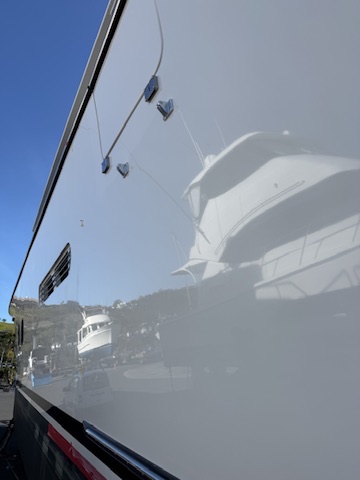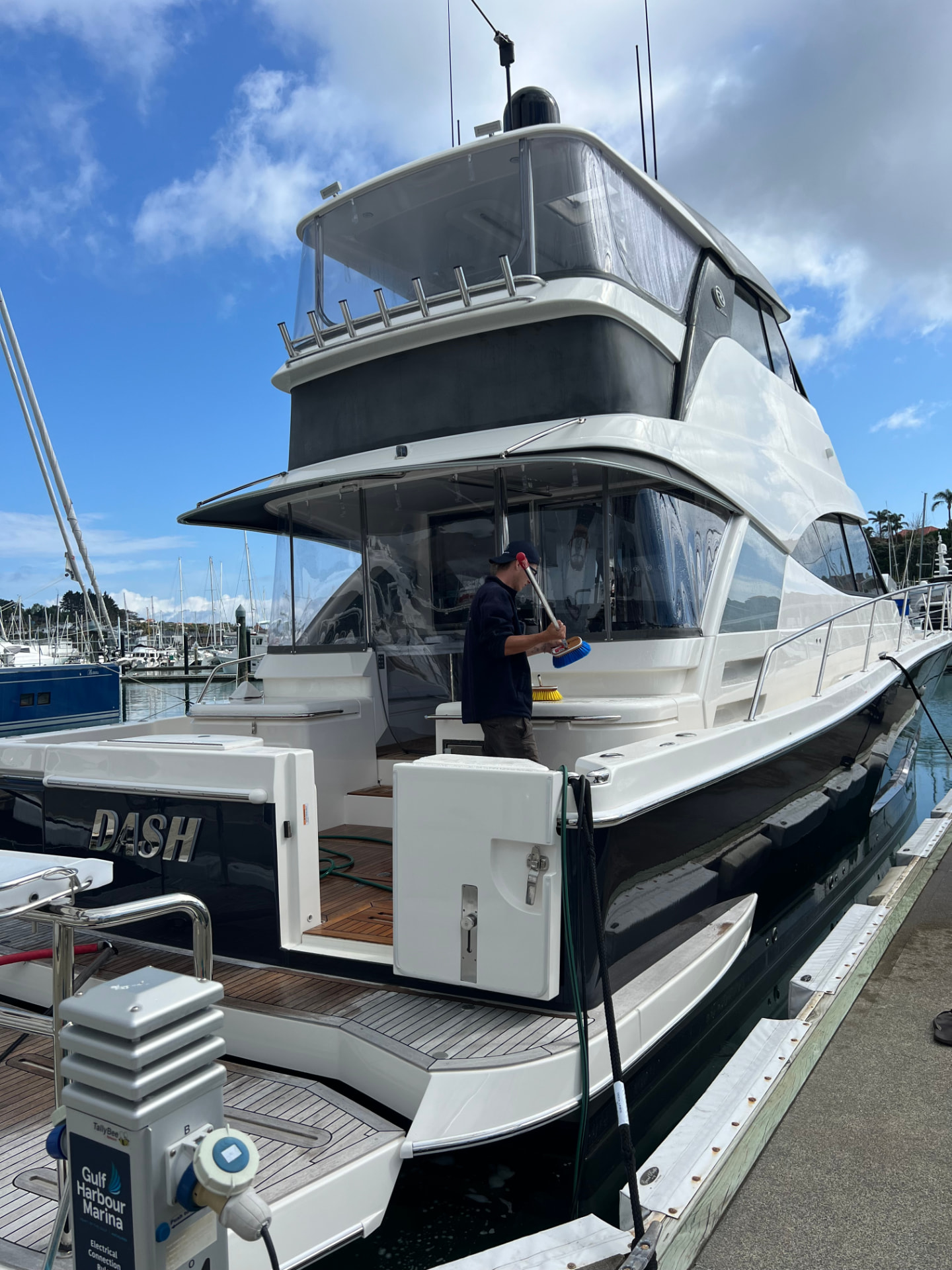
You can't stop gelcoat ageing completely, but you can slow oxidation considerably. Regular washing with a suitable marine cleaner, drying, a maintained layer of protection and periodic inspections make the biggest difference. Where oxidation has already set in, professional polishing can often restore gloss, although results depend on how much sound gelcoat remains and what work has been done before.
What gelcoat oxidation is
Gelcoat is the hard, pigmented resin layer that forms the outer surface of most fibreglass boats. Over time, exposure breaks down the surface of that resin. It loses its smoothness, scatters light instead of reflecting it, and begins to look dull, faded or chalky. Running a finger across badly oxidised gelcoat often leaves a powdery residue.
Coloured gelcoats, especially darker hulls, tend to show oxidation and fading sooner than white, but white gelcoat also yellows and dulls when it isn't maintained.
What causes gelcoat to become dull
UV exposure
Sunlight is the main driver. New Zealand has high levels of UV, and boats kept on marina berths or moorings in Auckland spend long periods exposed. Horizontal surfaces such as decks and cabin tops usually deteriorate faster than vertical topsides.
Weathering and salt
Salt spray, rain and temperature changes all contribute. Salt left to dry on the surface attracts moisture and can accelerate wear on gelcoat, stainless steel and glass.
Contamination
Exhaust soot, bird droppings, tannin from trees, atmospheric fallout and harsh cleaning products can stain and etch the surface. The longer contamination stays, the harder it is to remove.
Maintenance habits
Infrequent washing, abrasive brushes, household detergents and letting a boat dry with salt on it all speed up deterioration. So does leaving the surface unprotected for long periods.
What professional polishing can and can't do
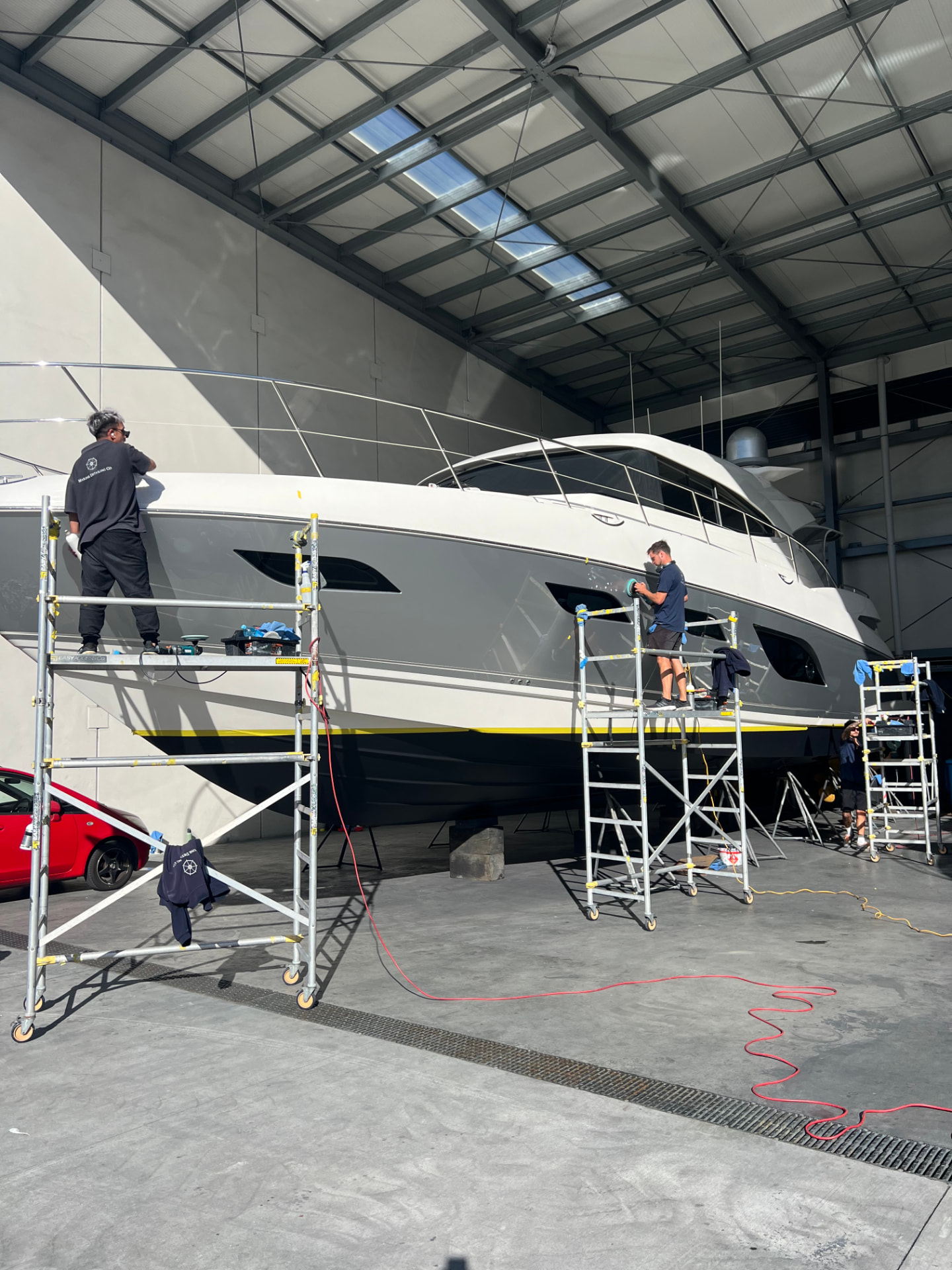
Machine polishing uses compounds and pads to remove a very thin layer of oxidised gelcoat and refine the surface underneath, restoring clarity and gloss. Depending on condition, this may be a single refining stage or a multi-stage cut and polish.
There are limits. Gelcoat is only so thick, and each heavy cut removes some of it. Areas that have been compounded many times, gelcoat that is very thin or worn through, crazing, deep scratches and previous repairs with mismatched colour may not respond fully. In some cases, the realistic outcome is improvement rather than a like-new finish, and occasionally recoating or painting is the more suitable path.
A careful assessment before polishing helps choose the least aggressive approach that gets a good result, preserving as much gelcoat as possible. Our specialist cut and polish page explains how we approach it.
A practical routine to slow oxidation
After use
- Rinse salt off with fresh water, working from top to bottom.
- Dry or chamois surfaces where practical to avoid water spots.
- Remove bird droppings and spills promptly.
Regularly
- Wash with a pH-balanced marine cleaner at the dilution the manufacturer specifies.
- Use soft brushes, clean mitts and microfibre rather than abrasive pads.
- Keep covers clean and fitted correctly so they don't trap moisture or rub the gelcoat.
Our guide to washing your boat without damaging its finish goes through a full washdown step by step.
Protection
- Maintain a layer of wax, polymer sealant or coating suited to the boat.
- Reapply or top up as the product directs, rather than waiting for the surface to look dull.
- Use maintenance products recommended for any coating already applied.
Inspection
- Check horizontal surfaces and darker panels for early fading or chalkiness.
- Look for crazing, chips and stress cracks that may need repair.
- Note areas where water beads less than it used to, a sign protection is wearing.
Protection needs maintaining
Waxes, polymer sealants and ceramic or nano coatings all help shield gelcoat from UV and contamination, and make cleaning easier. None of them stops deterioration permanently. They wear with exposure and washing, and each needs ongoing maintenance to keep working. Our comparison of wax, polymer sealant and ceramic coatings explains the differences.
For more durable protection on suitable surfaces, we offer nano coatings. For high-impact areas such as the bow and boarding points, paint protection film may also be worth considering.
Frequently asked questions
Gelcoat looking tired?
Tell us about your boat and we'll assess what polishing can realistically achieve before recommending the work.