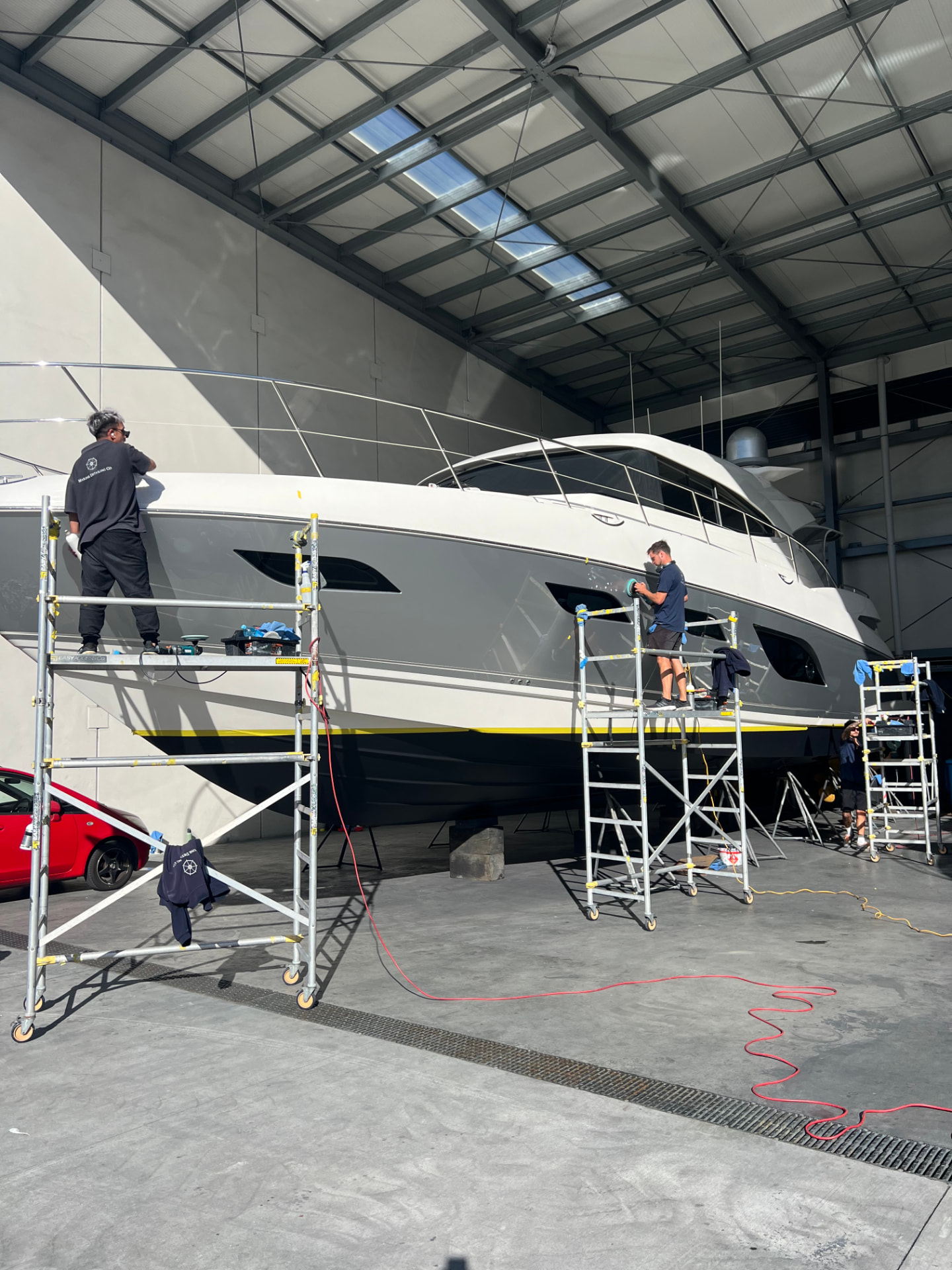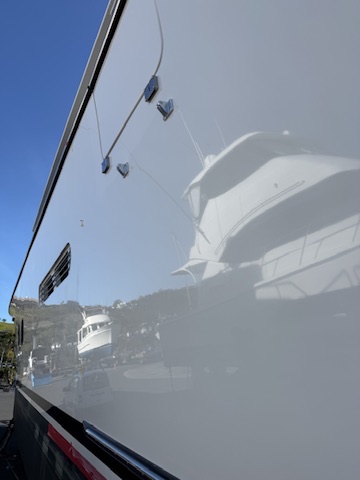
To wash a boat without damaging its finish, use a marine cleaner diluted as the manufacturer directs, clean soft tools, work from top to bottom in manageable sections, rinse before the detergent dries and dry the surface afterwards. Taking care with glass, stainless steel and any coatings, and following your marina's rules on water and runoff, completes a safe routine.
Before you start
Check the weather and the time of day. Washing in direct midday sun or on a hot, windy day makes cleaner dry on the surface quickly, which causes streaks and spotting. Early morning, late afternoon or overcast conditions are easier.
Check your marina's rules too. Many Auckland marinas have requirements for washdowns on the berth, including the products that can be used and what can go into the water. Some ask that heavier cleaning is done on the hardstand where runoff can be managed.
Equipment checklist
- A pH-balanced marine boat wash, plus any specialist cleaners recommended for coated surfaces.
- Two buckets: one for wash solution, one for rinsing tools.
- Soft-bristle deck brush and a soft wash brush on an extendable pole.
- Clean wash mitts and microfibre cloths, kept separate for glass.
- Hose with an adjustable nozzle; avoid high pressure on seals, clears and decals.
- Chamois or drying towels, and a squeegee suitable for glass.
- Non-slip footwear and a way to work safely at height.
Step-by-step washdown routine
- Rinse the whole boat with fresh water, top to bottom, to remove loose salt and grit before anything touches the surface.
- Mix your cleaner at the dilution printed on the product. Stronger is not better and can strip protection.
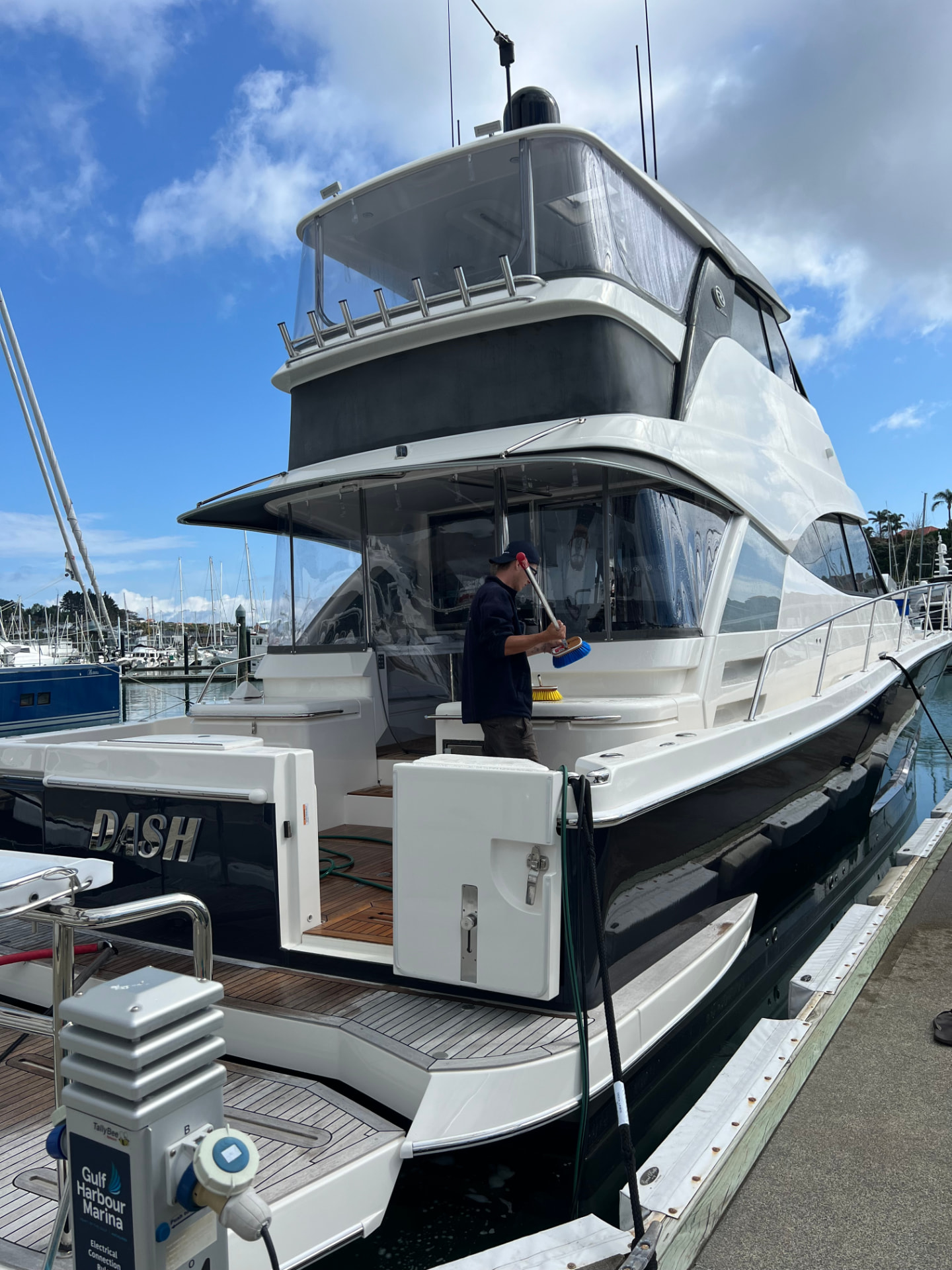
- Start at the highest point, such as the flybridge, hardtop or cabin top, and work downwards so dirty water runs onto areas not yet cleaned.
- Wash one manageable section at a time with a soft brush or mitt, rinsing tools in the clean bucket often.
- Rinse each section before the detergent has a chance to dry.
- Clean non-skin decks with a soft-bristle brush, working with the pattern rather than scrubbing hard.
- Give the boat a final thorough rinse from the top down.
- Dry gelcoat, glass and stainless with a chamois, microfibre or squeegee to prevent water spots.
Stopping detergent from drying
Detergent left to dry leaves streaks and residue and, with some products, can mark surfaces. Work in shade where possible, keep sections small, keep surfaces wet until rinsed and rinse straight away. If a section dries, re-wet it and wash again rather than wiping it dry.
Glass, stainless steel and coated surfaces
Glass and windows
Use a dedicated clean microfibre for glass, and avoid anything abrasive. Dry with a squeegee or clean cloth to avoid spotting. If glass has a water-repellent treatment, use cleaners compatible with it. For hard water marks and haze, see our window polishing and treatments.
Clears and covers
Clear vinyl and canvas scratch easily. Rinse first, wash gently with a cleaner suitable for clears and avoid brushes. Our clears clean and polish service restores clarity.
Stainless steel
Salt left on stainless can cause tea staining. Rinse and dry fittings after every wash, and avoid steel wool or abrasive pads, which can embed particles that rust. Our stainless polishing service removes staining that washing can't.
Coated and protected surfaces
If the boat has a wax, sealant or ceramic coating, use cleaners compatible with it. Harsh degreasers can shorten its life. Our guide to wax, polymer sealant and ceramic coatings explains how each should be maintained.
Responsible runoff
Whatever goes on the boat can end up in the marina. Use only the amount of cleaner you need, choose products suited to marine environments, avoid letting heavy grime, oil or old coatings wash into the water, and follow your marina's washdown rules. Below-waterline cleaning and anything involving antifoul residue usually belongs on a hardstand with appropriate containment.
Common mistakes to avoid
- Using household detergents or dishwashing liquid, which can strip protection.
- Scrubbing gelcoat with stiff brushes or abrasive pads.
- Dropping a mitt or cloth on the deck and carrying on with it.
- Washing in hot sun and letting cleaner dry.
- Using high pressure on seals, hatches, clears or decals.
- Skipping the final rinse and dry.
- Using the same cloth on glass that was used on the hull.
If you'd rather leave it to someone else, our detail washdown service keeps the boat clean on a regular basis. Our guide to preventing gelcoat oxidation covers how washing fits into long-term care.
Frequently asked questions
Prefer to leave the washing to us?
Ask for a quote on a one-off or regular detail washdown at your marina.