In Auckland, winter boat maintenance is mostly about managing moisture. The climate is mild compared with many boating regions, so the main risks are damp, condensation, mould and grime building up while the boat is used less, rather than freezing. Good ventilation, clean and well-fitted covers, regular washdowns, clear drainage and routine inspections keep a boat in good shape until spring.

Why Auckland winters are different
Winter maintenance guides written for colder countries often focus on freezing temperatures, winterising engines against ice and draining water systems to prevent burst pipes. Auckland rarely gets the sustained hard frosts that make those steps routine, so many of them don't apply in the same way. If your boat will be stored somewhere colder, or you're unsure, check with your engine or systems specialist.
What Auckland winters do bring is rain, humidity and cool nights. Warm air inside a closed boat meets cold surfaces and condenses, and with less use there is less chance for the boat to air out. That combination is ideal for mould, mildew and musty smells.
Ventilation, moisture and mould
Moisture is the common thread in most winter problems. Keeping air moving and surfaces dry makes the biggest difference inside the boat.
- Use vents and, where it's safe and secure, leave lockers and cupboard doors ajar so air can circulate.
- Remove wet gear, towels, lifejackets and bedding rather than storing them aboard damp.
- Lift cushions and mattresses or stand them on edge to stop moisture becoming trapped underneath.
- Wipe down condensation on windows and hatches when you visit.
- Clean any early signs of mould promptly with products suited to the surface, rather than leaving it to spread.
- Consider moisture absorbers or a dehumidifier where power and safety allow; follow the manufacturer's instructions.
If mould has already taken hold in upholstery, headliners or lockers, an interior detail can clean and refresh the cabin before the new season.
Covers, drainage and washdowns
Covers
A good cover keeps rain and UV off, but a poorly fitted one can trap moisture, pool water or rub against gelcoat in the wind. Check that covers are clean, tensioned and supported so water runs off, and that there's enough airflow underneath.
Drainage
Winter rain finds any weakness. Keep cockpit drains, scuppers and deck drains clear of leaves and debris, and check that water isn't collecting in places it shouldn't. Standing water can stain surfaces and find its way into the boat.
Washdowns
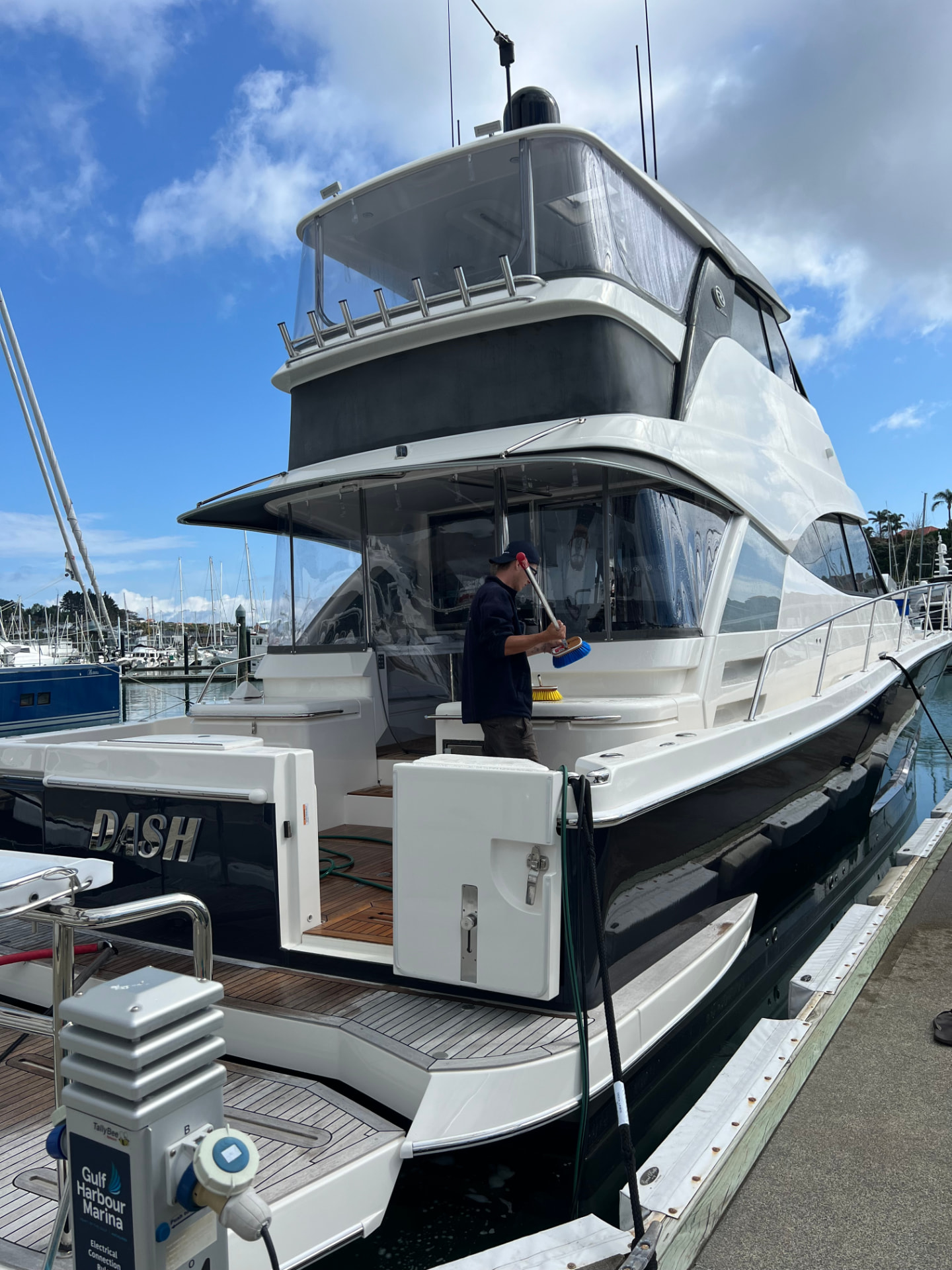
Boats used less in winter still collect salt, dust, droppings and mould spores. A regular washdown stops contamination from bonding to surfaces and makes the spring clean much easier. Our guide to washing your boat without damaging its finish explains a safe routine, or our detail washdown service can keep on top of it for you.
Routine inspections
Short, regular visits catch small issues before they become big ones. At a general inspection level, look for:
- Water in the bilge, and whether bilge pumps and float switches appear to be working.
- Leaks around hatches, windows and deck fittings after rain.
- Mooring lines, fenders and chafe protection in good condition.
- Battery state and any charging system behaving as expected.
- Signs of corrosion on stainless steel and fittings.
- Any change in how the boat is sitting in the water.
Engine, electrical, gas and mechanical servicing should be carried out by appropriate specialists. This checklist is for spotting issues, not repairing them.
Checklist: boats left afloat
- Check mooring lines, chafe gear and fenders, particularly ahead of storms.
- Keep the bilge dry and check pumps regularly.
- Make sure covers are secure and draining properly.
- Ventilate the interior and remove damp items.
- Wash salt and droppings off decks, glass and stainless.
- Keep an eye on hull fouling; growth slows in cooler water but doesn't stop.
- Run the engine or arrange servicing as your engine specialist recommends.
- Visit after heavy weather to check for leaks or damage.
Checklist: boats stored ashore
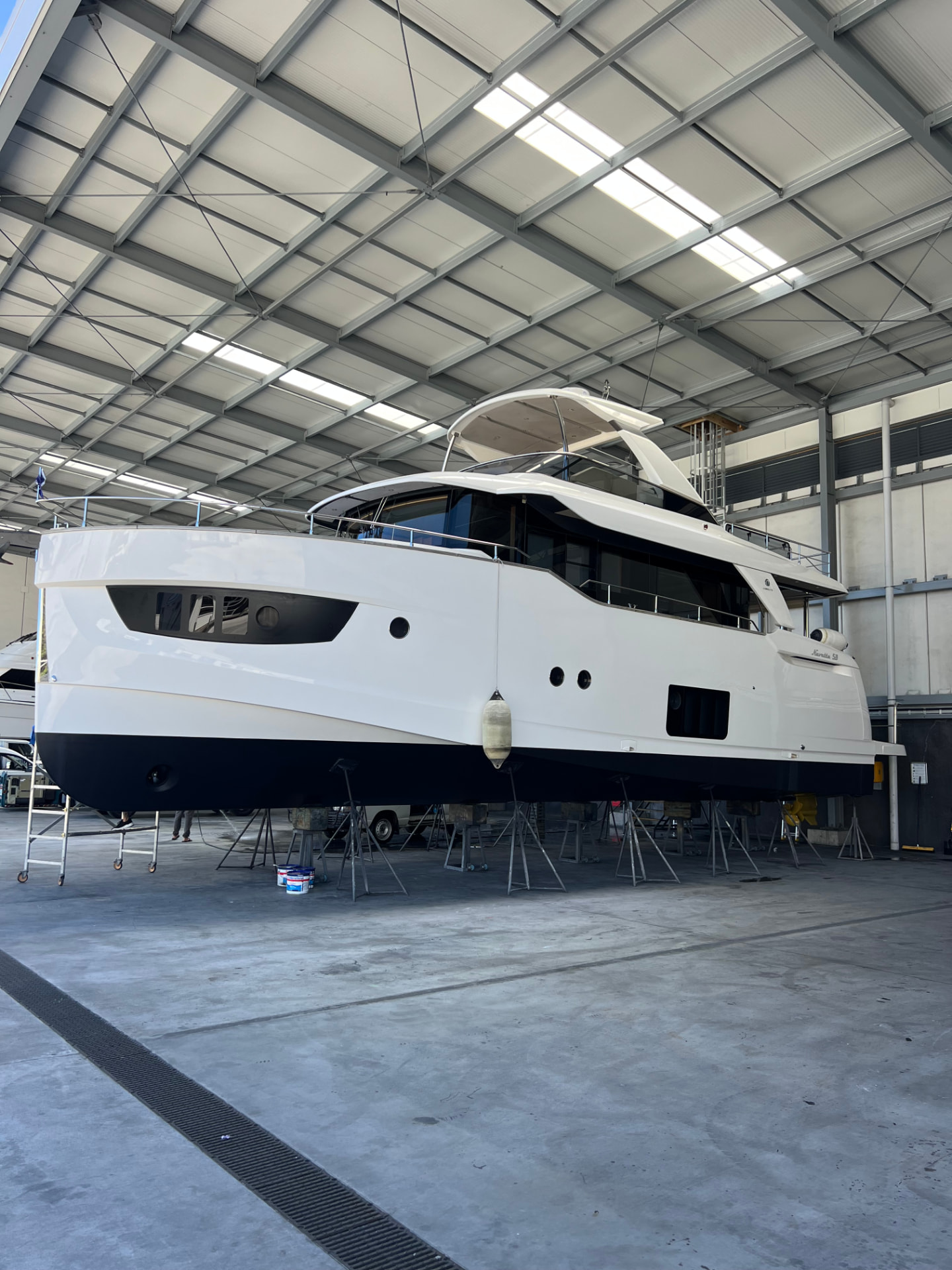
- Confirm stands, cradles or trailer supports are secure and correctly positioned.
- Make sure rain can drain out of the cockpit and bilge, as the yard and boat allow.
- Fit covers so water runs off and air can circulate.
- Ventilate the interior and remove cushions, bedding and wet gear.
- Check for water ingress after rain.
- Wash the hull and topsides before storage so contamination doesn't sit all winter.
- Use the time to plan haul-out work such as antifouling, polishing or repairs.
- Follow the yard's rules for any work done while the boat is ashore.
Winter is a good time to plan the work the boat will need before summer. Our summer preparation checklist covers what to prioritise.
Frequently asked questions
Want help keeping on top of winter care?
Ask us about interior cleans and regular washdowns to keep damp and grime under control.